
Boundaries Are Not Preferences: Why Most People Get Them Wrong


Paige Elizabeth
Founder and Coach
Boundaries are one of the most misunderstood concepts in modern self-development.
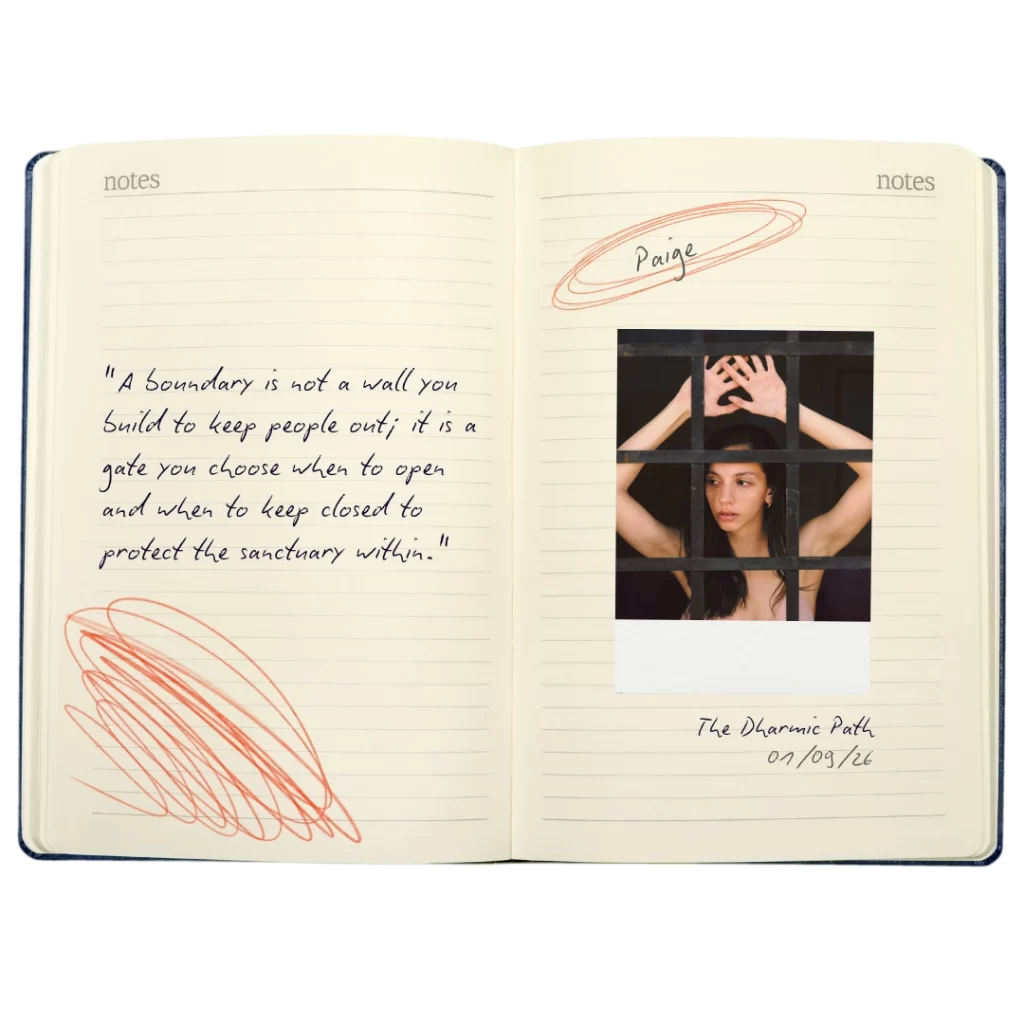
They’ve been watered down into communication scripts, polite requests, or
“I statements”
that sound good but don’t actually protect anything. People are told that if they just
say the right thing,
others will respect them.
And when that doesn’t work, they assume they’re bad at boundaries.
They’re not.
They were never taught what boundaries actually are.
Boundaries are not preferences
A preference is flexible. A boundary is not.
A preference sounds like:
“I’d prefer if you didn’t talk to me that way.”
A boundary sounds like:
“I don’t stay in conversations where I’m spoken to that way.”
One invites negotiation.
The other defines a condition for participation.
Most people confuse the two — and then wonder why their “boundaries” keep getting violated.
Boundaries are structural, not situational
Real boundaries aren’t something you invent in the moment.
They’re not reactions to bad behavior.
They’re structures that exist before the situation ever happens.
When boundaries are structural, you don’t need to explain them.
You don’t need to justify them.
You don’t need to enforce them emotionally.
They’re simply there.
And when someone crosses them, the response isn’t drama — it’s data.
Defenses vs. boundaries
This is where most people get stuck.
A defense is reactive.
A boundary is definitive.
Defenses look like:
Over-explaining
Freezing
Appeasing
Getting angry after the fact
Replaying the conversation in your head for days
Defenses happen when the nervous system is trying to protect you without a clear internal line.
Boundaries happen when the line already exists.
Defenses tell you where a boundary is needed.
Boundaries tell you what happens when it’s crossed.
If you pay attention, every emotional reaction is feedback — not failure.
Violations reveal your real deal-breakers
Most people don’t know their boundaries because they’ve never allowed themselves to name their deal-breakers.
Instead, they minimize:
“It’s not that bad.”
“I’m probably overreacting.”
“They didn’t mean it.”
“I don’t want to be difficult.”
But the body doesn’t lie.
If something keeps draining you, activating you, or eroding your sense of self,
it’s touching a boundary ,whether you’ve named it or not.
The work isn’t to tolerate more.
The work is to listen sooner.
Why values create boundaries automatically
When people try to “set boundaries” without knowing their values, everything feels forced.
Values create boundaries by default.
If you value honesty, you don’t stay in relationships that require you to pretend.
If you value respect, you don’t argue for basic decency.
If you value self-trust, you don’t outsource your reality to someone else’s approval.
This is why boundary work without values work collapses under pressure.
When your values are clear, boundaries stop being personal.
They become logistical.
The real reason boundaries feel scary
Boundaries threaten attachment — not safety.
Most people were conditioned to believe that being loved required being agreeable, flexible, or self-sacrificing.
Boundaries feel dangerous because they challenge the old survival strategy:
“If I assert myself, I’ll lose connection.”
But here’s the truth:
If asserting yourself ends the relationship, the relationship was already unsafe.
Boundaries don’t create loss.
They reveal it.
Authority vs. permission
Boundaries fail when you’re seeking permission.
Authority doesn’t ask.
It decides.
That doesn’t mean becoming harsh or closed. It means being internally settled.
When you stop outsourcing your authority, you stop negotiating your self-respect.
And people feel that immediately.
The quiet power of aligned boundaries
Aligned boundaries don’t require explanations.
They don’t require rehearsed speeches.
They don’t require force. They require clarity.
And clarity changes everything your nervous system, your relationships, and the way you move through the world.
Ready to align your life with your actual values instead of your old survival strategies? Stop asking for permission and start deciding. Let’s work together to reclaim your internal authority.
LIKE THIS ARTICLE? Share on
Facebook
Twitter
LinkedIn