
The One Thing Great Leaders Understand That Changes Everything

Paige Elizabeth
Founder and Coach
When Expertise Isn’t Enough to Lead
Yesterday, I spent several hours with a trainer who clearly knew his craft.
He was intelligent, experienced, and technically exceptional.
If you had asked me whether he understood the subject matter, my answer would have been an immediate yes.
But by the end of the session, I realized something else.
Knowledge alone doesn’t make someone an effective leader.
It doesn’t make them an effective teacher.
And it certainly doesn’t make people want to follow them.
Throughout the training, I watched something subtle happen.
At first, people asked questions.
Then fewer questions.
Eventually, almost none.
The room became quieter—not because everyone suddenly understood everything—but because people no longer felt comfortable engaging.
That moment reminded me of one of the most overlooked leadership principles in existence.
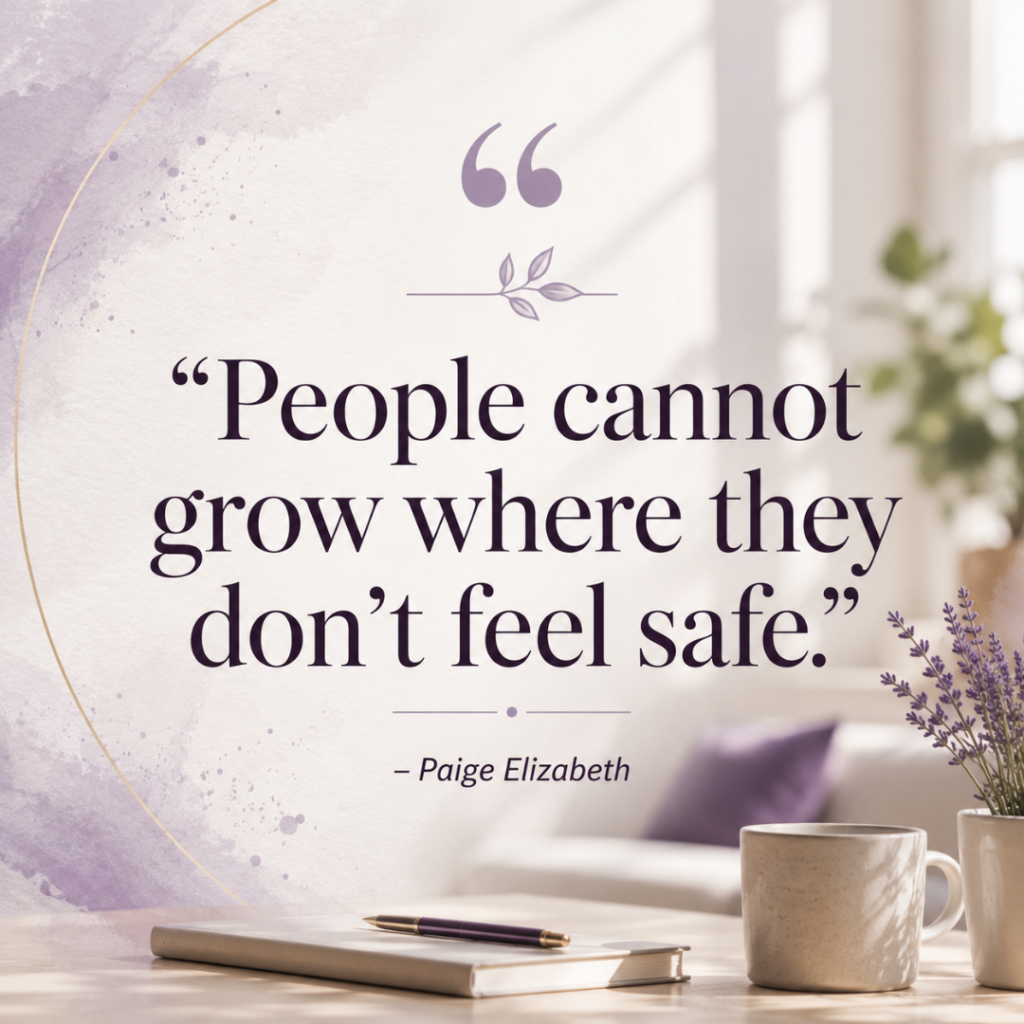
People cannot grow where they don't feel safe.
We often think leadership is about vision, strategy, intelligence, or expertise.
Those things matter.
But they only matter after one fundamental need has been met.
Safety.
Not physical safety.
Psychological safety.
The confidence that I can ask a question without being ridiculed.
The confidence that I can admit I don’t understand something.
The confidence that making a mistake won’t result in humiliation.
The confidence that my voice matters.
Without those things, people don’t stop having questions.
They simply stop asking them.
That’s an important distinction.
Silence is rarely evidence of understanding.
More often, it’s evidence of fear.
What Safety Actually Looks Like
Creating safety doesn’t mean lowering standards.
It doesn’t mean everyone gets a participation trophy.
It doesn’t mean difficult conversations disappear.
In fact, the safest leaders often have the highest expectations.
The difference is how they communicate those expectations.
They correct without shaming.
They challenge without humiliating.
They teach without making someone feel small.
They create space for curiosity instead of demanding perfection.
That’s where real learning happens.
This Isn't Just About Work
When people hear the phrase “psychological safety,” they often picture Fortune 500 companies or leadership seminars.
But this principle shows up everywhere.
A child who stops telling their parents what’s happening at school.
A spouse who no longer shares what they’re feeling.
A team member who has a great idea but keeps it to themselves.
A friend who agrees with everyone just to avoid conflict.
None of these people stopped thinking.
They stopped feeling safe enough to be honest.
That’s an entirely different problem.
The Cost of Unsafe Environments
When people don’t feel safe, they become performers instead of participants.
They begin managing impressions instead of telling the truth.
Creativity disappears.
Questions disappear.
Innovation disappears.
Trust disappears.
Eventually, relationships disappear too.
This happens slowly.
Rarely does someone wake up one morning and decide to disengage.
Instead, they experience dozens of tiny moments where vulnerability is met with criticism, impatience, sarcasm, or dismissal.
Eventually, they conclude:
“It’s safer to stay quiet.”
Once that belief takes root, growth stops.
A Question Worth Asking Yourself
If you’ve been feeling stuck lately, ask yourself something deeper than, “What’s wrong with me?”
Instead ask:
Do I feel safe where I am?
Do I feel safe asking questions?
Do I feel safe making mistakes?
Do I feel safe sharing ideas?
Do I feel safe disagreeing respectfully?
Do I feel safe being fully myself?
Because if the answer is no, the issue may not be your capability.
It may be your environment.
Environment matters more than most people realize.
A healthy environment doesn’t magically solve every problem.
But an unhealthy one creates problems that don’t need to exist.
Great Leaders Build Safety First
The best leaders I’ve worked with all have something in common.
They make people feel seen.
They make people feel heard.
They make people feel respected.
They don’t have all the answers.
But they create an atmosphere where other people feel comfortable finding theirs.
That’s leadership.
Not because it feels good.
Because it produces better thinking, stronger relationships, healthier teams, and people who become more than they believed they could be.
When people feel safe, they become curious.
Curiosity leads to learning.
Learning leads to confidence.
Confidence leads to growth.
And growth changes everything.
What Environment Are You Creating?
Whether you’re leading a business,
raising children,
coaching a team,
or simply trying to strengthen your relationships,
ask yourself one final question:
Do the people around me become more open
when I’m present… or more guarded?
The answer to that question will tell you far more about your leadership than your résumé ever could.
Ready to Create an Environment Where People Thrive?
Whether you’re leading a team, growing your business, or simply trying to become a better communicator, leadership starts with creating an environment where people feel safe enough to learn, contribute, and grow.
If you’re ready to explore what that looks like in your organization or your own leadership journey, I’d love to help.
Let’s start the conversation. Schedule a discovery call and discover how creating psychological safety can transform your leadership, your culture, and your results.
LIKE THIS ARTICLE? Share on
Facebook
Twitter
LinkedIn