
Your Problems Aren’t the Core Issue. They’re the Symptoms


Paige Elizabeth
Founder and Coach
Most people think they’re fighting the problem in front of them.
The ex-husband.
The custody battle.
The workplace power struggle.
The chronic stress.
The burnout.
The anxiety.
But what they’re actually fighting is the echo of a much older decision.
Here’s the hard truth most women are never told:
Your circumstances are not the root problem. They are the manifestation of a pattern that started when you chose to leave yourself.
This isn’t about blame. It’s about power.
Let me explain.
When survival strategies become cages: The truth behind the endless power struggle.
I work with women who are smart, capable, self-aware, and exhausted from fighting their lives.
One client, for example, is locked in ongoing power struggles with her ex-husband.
Custody disputes. Legal battles. Emotional warfare.
On the surface, it looks like the problem is him.
But it isn’t.
He is a symptom.
The real issue began decades earlier, when she made a decision, consciously or unconsciously,
to sacrifice herself in order to maintain safety, stability, or belonging.
At the time, it made sense. She adapted. She survived. She did what she had to do.
But self-abandonment always collects interest.
The fight you’re in today isn’t about today, it’s about the truth you learned to override.
When you choose sacrifice over self-presence, you don’t avoid conflict, you postpone it.
And eventually, it shows up on the material plane:
in your body,
your relationships,
your finances,
your health,
and your nervous system.
The fight you’re in today is rarely about today.
It’s about the part of you that learned to override your own truth in order to stay connected, loved, or protected.
This is where people get defensive, because they hear this as blame. It isn’t. It’s an invitation to reclaim authorship.
You didn’t create your wounds. But you did adapt around them.
And those adaptations shape your reality until they’re brought into awareness.
Power struggles are rarely about power, they are the cries of a fractured identity.
Here’s the trap: when you believe the problem is external, you keep fighting externally.
You argue.
You litigate.
You explain.
You push.
You resist.
And sometimes those actions are necessary, but they’re not sufficient.
Because you’re still sourcing your power from the same fractured place.
Healing doesn’t mean tolerating bad behavior or avoiding action.
It means addressing the internal rupture that keeps recreating the same dynamics in different forms.
Power struggles are rarely about power. They’re about identity.
Why your nervous system chooses a familiar war over an unfamiliar peace.
When someone has sacrificed themselves long enough,
the nervous system doesn’t trust peace.
It equates safety with control. So conflict becomes familiar.
The body stays mobilized. The mind stays vigilant.
And then we say things like:
• “I can’t relax.”
• “I’m always on edge.”
• “Why does this keep happening to me?”
• “Why do I keep attracting the same situations?”
Because the system hasn’t been repaired at the source.
You can win every argument and still be trapped in the pattern.
The Shift that Changes Everything: Moving from "How do I fix this?" to "How did I leave myself?
Real change happens when you stop asking,
“How do I fix this situation?”
and start asking,
“What part of me learned that leaving myself was necessary?”
When that part is met, not judged, not shamed, not forced to change,
the fight dissolves on its own. Not because you surrendered your power,
but because you reclaimed it internally.
This is the paradox most people miss:
When the internal conflict resolves, the external conflict no longer has fuel.
The body softens. The nervous system stabilizes. Decisions become cleaner.
Boundaries become non-negotiable without being aggressive.
And circumstances shift,sometimes quietly, sometimes dramatically, without the constant push.
The Ultimate Act of Leadership: Ending the War with Yourself.
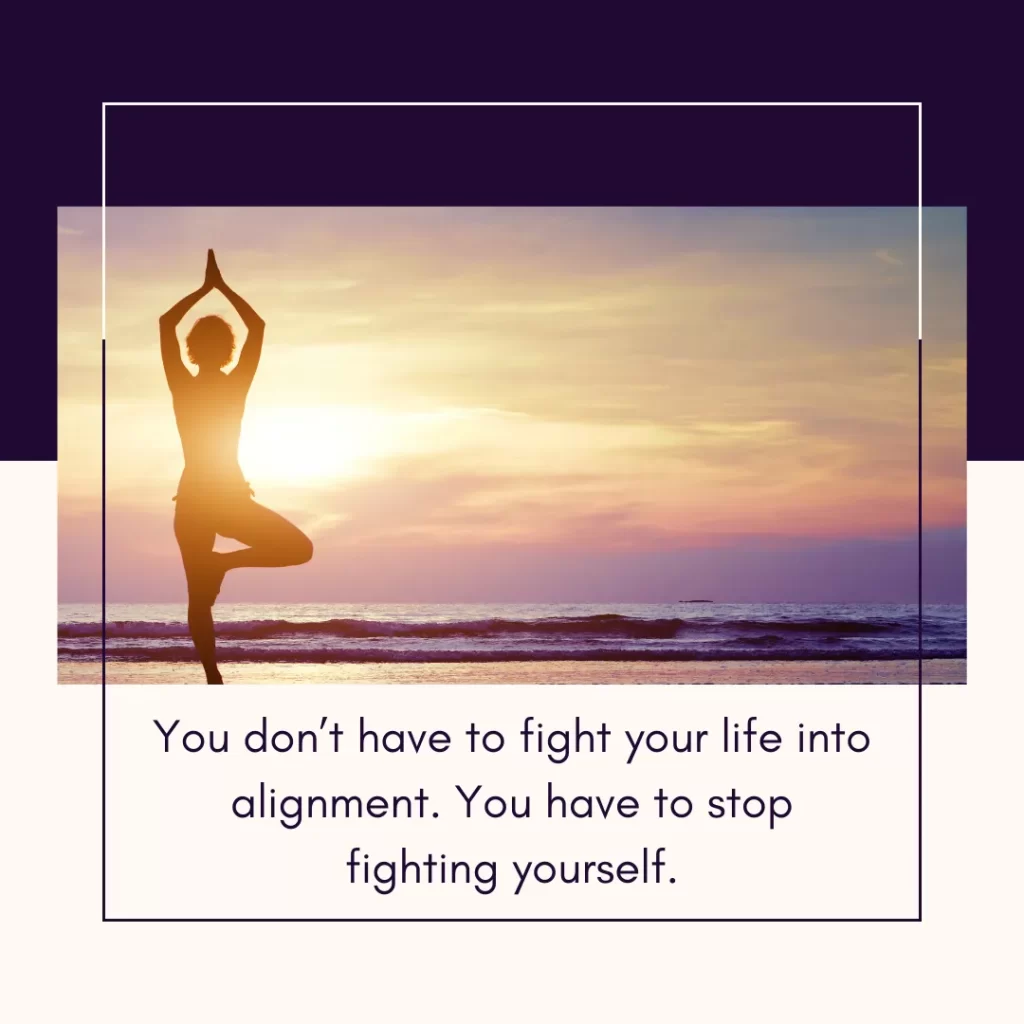
You don’t have to fight your life into alignment.
You have to stop fighting yourself.
Your problems are not proof that you’re failing.
They’re feedback.
They’re signals pointing back to the moment you learned that self-betrayal was the price of survival.
And the moment you stop paying that price, everything changes.
Not because the world magically improves, but because you are no longer building your life from a fractured foundation.
That’s not avoidance.
That’s leadership.
Stop Fighting the Symptoms. Start Healing the Source.
Are you exhausted from fighting the same battles in your relationships, your career, and your body? It’s time to look beneath the surface and repair the foundation.
Let’s identify the patterns of self-abandonment keeping you stuck and reclaim your internal authorship.
LIKE THIS ARTICLE? Share on
Facebook
Twitter
LinkedIn