
When Women Speak, They Heal and Why Most Women Have Been Taught Not To


Paige Elizabeth
Founder and Coach
Why women feel burned out after 35 and what the nervous system has to do with it
There’s a moment that happens for a lot of women, usually somewhere after 35, where their body starts to change.
They feel more tired. More anxious. Less resilient. Their sleep shifts. Their mood shifts. Their motivation drops. Their body feels heavier, slower, unfamiliar.
And almost immediately, they’re handed a diagnosis:
“It’s just perimenopause.”
But what if that’s not true?
What if what we’ve been taught to normalize… is actually the final stage of something that’s been building for decades?
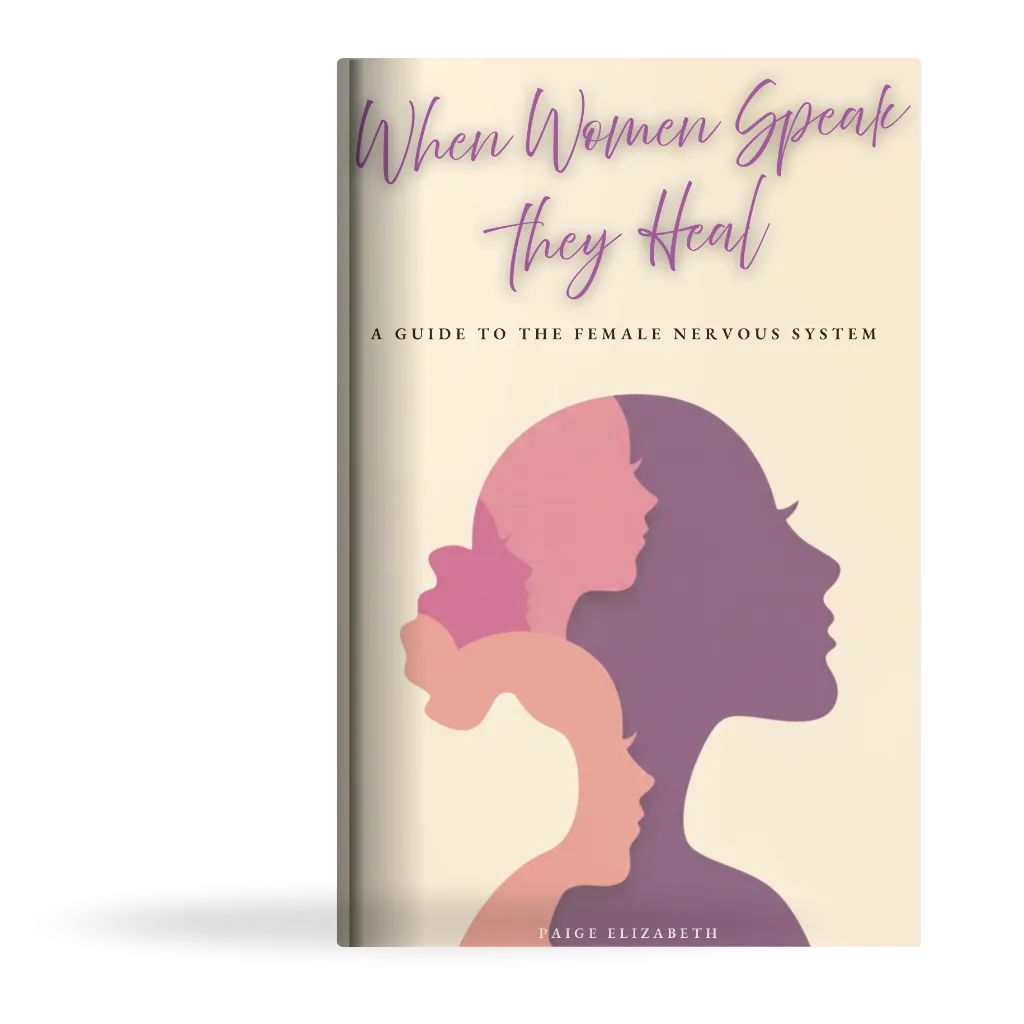
That’s the question behind my book, When Women Speak, They Heal: A Guide to the Female Nervous System
Because the truth is, most women aren’t breaking down because of age.
They’re breaking down because their nervous system has been under pressure for far too long.
The Real Problem No One Is Talking About
Let’s be honest.
Women today are expected to do more than ever before.
Hold careers. Maintain relationships. Take care of families. Stay physically attractive. Be emotionally available. Be productive. Be calm.
All while running on:
- Undereating
- Overtraining
- Chronic stress
- Emotional suppression
- And very little real support
At some point, the body stops cooperating.
And instead of asking why, the system labels it.
Hormones. Aging. Perimenopause.
Case closed.
But that’s not a diagnosis. That’s a dismissal.
As I wrote in the book, if the body were on trial, the evidence wouldn’t point to age, it would point to years of accumulated stress, depletion, and dysregulation
The Nervous System Is the Missing Piece
Everything in the female body is downstream of the nervous system.
Hormones don’t operate independently.
Metabolism doesn’t operate independently.
Even mood and energy don’t operate independently.
They are all governed by whether the body feels safe… or not.
When the nervous system is regulated, the body can:
- Produce and balance hormones properly
- Recover from stress
- Maintain energy
- Support emotional stability
But when the nervous system is chronically dysregulated?
Everything starts to compensate.
And that’s when symptoms show up.
Not as random failures.
But as signals.
Why “Perimenopause” Became the Easy Answer
Here’s the uncomfortable truth:
Labeling everything as perimenopause protects the system.
It prevents deeper questions like:
- Why has this woman been running on empty for 20 years?
- Why is her cortisol dysregulated?
- Why is her body in a constant stress response?
- Why has she been taught to override her own needs?
Because those questions would require accountability, from medicine, from culture, from relationships, from systems that benefit from women over-functioning.
So instead, we normalize the outcome.
We call it “just part of being a woman.”
But it’s not.
The Shift: From Managing Symptoms to Understanding the System
This is where most approaches get it wrong.
They try to fix the symptoms.
Hormones. Supplements. Protocols.
And sometimes those things help.
But if the nervous system is still dysregulated, the relief doesn’t last.
Because the root hasn’t changed.
That’s why the work I teach, and what this book is built around, is different.
It focuses on:
- Restoring parasympathetic function
- Stabilizing the body through nutrition and minerals
- Releasing stored stress and trauma patterns
- Rebuilding a relationship with the body
- Reclaiming personal authority and voice
Because healing isn’t just physical.
It’s physiological, emotional, and behavioral.
Why Speaking Is Part of Healing
One of the most overlooked pieces of regulation is expression.
Women have been conditioned to:
- Stay quiet
- Keep the peace
- Suppress emotions
- Prioritize others
But silence has a cost.
It keeps the nervous system in a state of tension.
It reinforces internal conflict.
And over time, that conflict becomes physical.
Speaking, truthfully, honestly, is not just emotional release.
It’s biological regulation.
It signals safety.
It completes cycles that were never allowed to finish.
It brings the body out of survival mode.
That’s why the title of this book matters.
Because when women speak, they don’t just feel better.
They begin to heal.
Understanding Your Body Instead of Mislabeling It
This isn’t an argument against perimenopause.
It’s an argument against misdiagnosis.
Because yes, hormonal transitions exist, but they do not have to be synonymous with suffering.
A regulated body experiences those transitions very differently than a dysregulated one, and that distinction changes everything.
This book is not just information.
It’s an invitation.
To stop abandoning yourself.
To stop normalizing dysfunction.
To start listening to your body, not as something that’s broken, but as something that’s been communicating all along.
Because the truth is, you were never the problem, and your body has been trying to show you that the entire time.
Ready to Go Deeper?
If you’ve been told your symptoms are “normal”… but something in you knows they’re not, this book will change how you see your body, your health, and your life.
When Women Speak, They Heal: A Guide to the Female Nervous System is now available on Amazon.
LIKE THIS ARTICLE? Share on
Facebook
Twitter
LinkedIn